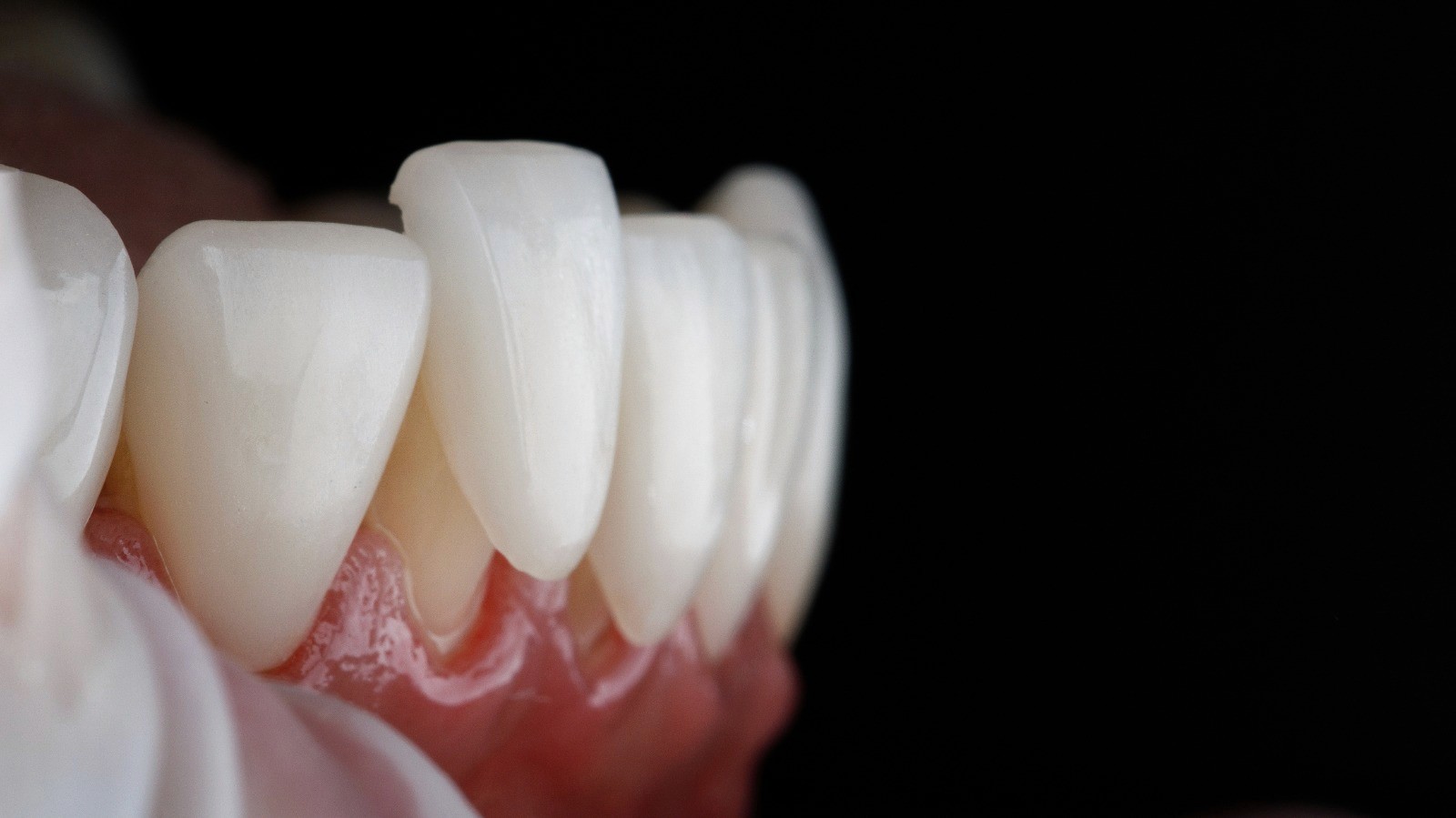
If you are considering veneers, one of the first decisions you will face is choosing between porcelain and composite. Both options can improve the appearance of your teeth, but they differ in how they are made, how long they last, and what they cost.
In this guide, we will walk you through the key differences, benefits, and considerations of each type to help you make an informed decision.
Understanding Dental Veneers
Before comparing the two types, it helps to understand what veneers are and what they can realistically achieve.
What Are Veneers?
Dental veneers are thin, custom-shaped shells bonded to the front surface of your teeth to improve their appearance. They are used to address a range of cosmetic concerns including discoloration that does not respond to whitening, chips, small gaps, uneven edges, and minor surface irregularities.
The procedure is considered minimally invasive compared to other restorative options. Only a small amount of enamel is removed to accommodate the veneer, and most patients find the process straightforward and comfortable.
The two primary materials used are porcelain and composite resin. Each has distinct characteristics that make it more or less suitable depending on your situation.
Benefits of Getting Veneers
When planned and placed correctly, veneers offer results that go beyond cosmetic improvement. They create a more uniform and balanced smile, resist surface staining, and in some cases provide mild reinforcement for worn enamel. Patients who undergo a smile makeover with veneers commonly report greater confidence in both social and professional settings.
Porcelain Veneers
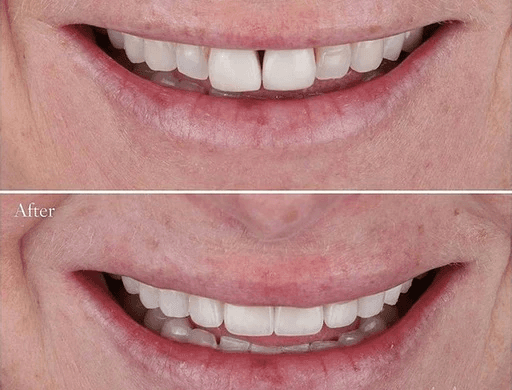
Porcelain is the most widely recommended option for patients seeking a long-term, natural-looking result. Here is what you need to know before deciding if it is right for you.
How They Are Made
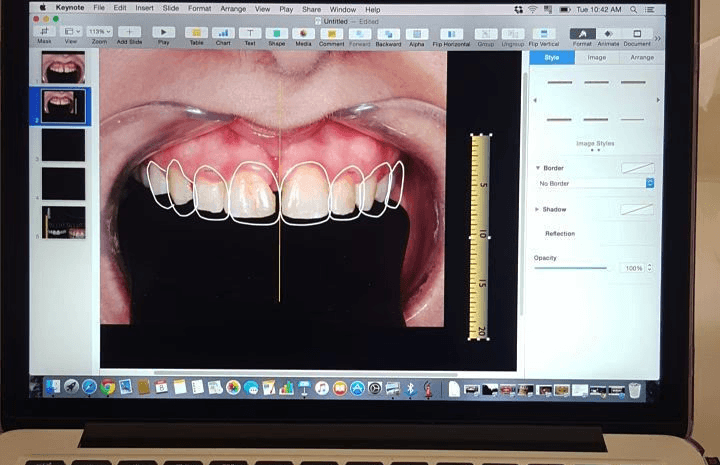
Porcelain veneers are fabricated in a dental laboratory from high-quality ceramic material. After a detailed digital scan and smile design session, each veneer is custom-crafted to match your tooth color, shape, and size. Temporary veneers protect your teeth while the permanent ones are being made, and the final placement typically takes place at a second or third appointment.
Why Patients Choose Porcelain
The primary reason patients choose porcelain is aesthetics. Ceramic closely replicates the way natural enamel interacts with light, producing a translucency that composite resin cannot fully match. The result is a natural-looking finish that is difficult to distinguish from real teeth.
Porcelain is also highly stain-resistant due to its non-porous surface. Coffee, tea, and other pigment-heavy foods and drinks have minimal effect on the material over time. In terms of durability, porcelain veneers typically last between 10 and 20 years with proper care, making them a reliable long-term investment according to research published in the Journal of Prosthetic Dentistry.
What to Know Before Committing
Porcelain veneers are a premium, long-term investment in your smile. Because each veneer is custom-crafted in a professional laboratory to ensure a perfect fit and life-like finish, the process typically spans two to three visits. While this requires a small amount of permanent enamel preparation, this ensures the most secure bond and a seamless, natural profile.
Choosing porcelain means choosing the highest standard of durability and aesthetics available in modern dentistry. A dental consultation at our center is the best way to see how this precision-crafted solution can be tailored to your specific goals.
Composite Veneers
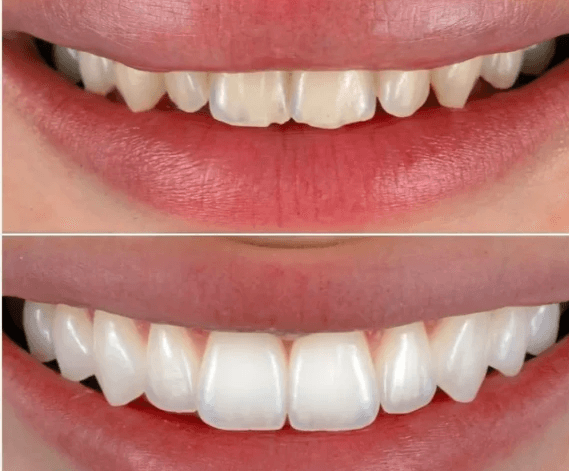
Composite is a practical and conservative option for patients looking to address minor cosmetic concerns without a significant time or financial commitment. Here is what to consider before choosing this route.
How They Are Made
Composite veneers are made from tooth-colored resin that is applied and sculpted directly onto your teeth in a single visit. There is no laboratory involved. The material is shaped, hardened, and polished chairside by your dentist, making the process faster and generally more conservative in terms of enamel preparation.
Why Patients Choose Composite
The most immediate advantage is accessibility. Composite veneers cost significantly less than porcelain, which makes them a practical entry point for patients who want cosmetic improvement without a large upfront investment. Because less enamel is typically removed, the procedure is also more conservative, and if a composite veneer chips or cracks, it can often be repaired in a single appointment without replacing the entire veneer.
For patients with minor cosmetic concerns such as small chips, slight discoloration, or narrow gaps, composite veneers can deliver a meaningful improvement quickly and with minimal disruption to the tooth structure. This aligns with findings from the British Dental Journal, which notes composite bonding as an effective, conservative approach for mild aesthetic corrections.
What to Know Before Committing
Composite resin is a porous material, which means it absorbs pigments from food and drink more readily than porcelain. Surface staining is more likely over time, particularly with regular consumption of coffee, tea, or red wine. Composite veneers also have a shorter lifespan, typically ranging from five to seven years before they require touch-ups or replacement.
If you are looking for a long-term cosmetic solution that requires minimal ongoing maintenance, composite may not be the most cost-effective choice in the long run, even if the initial cost is lower.
Comparing Porcelain vs. Composite Veneers Side by Side
Feature | Porcelain | Composite |
Cost | Higher upfront investment | More affordable |
Aesthetics | Superior translucency and natural finish | Good for minor corrections |
Stain Resistance | High, non-porous surface | Lower, absorbs pigments over time |
Durability | 10 to 20 years | 5 to 7 years |
Procedure Time | 2 to 3 visits | Single visit |
Repairability | Full replacement if damaged | Can often be repaired chairside |
Enamel Removal | Minimal but permanent | Minimal, sometimes none |
The right choice depends on what you are trying to achieve, how long you want the results to last, and what you are prepared to invest. Neither option is universally better; they serve different needs.
How to Choose the Right Veneer for Your Smile
Choosing between porcelain and composite comes down to more than just preference. Several clinical and personal factors play a role in determining which material will serve you better over time.
Cosmetic Goals
Before deciding, consider the concerns you want to address. Minor chips or slight discoloration are often well-served by composite veneers, while more extensive corrections usually point toward porcelain. If your primary goal is to address gaps or crowding, you may prefer to straighten your teeth with Invisalign treatment before considering cosmetic veneers.
Oral Health
Your oral health affects which veneer material will perform best. Active gum disease, untreated cavities, or teeth grinding should be addressed before any veneer treatment. The condition of your enamel, your bite, and daily habits including diet and nighttime teeth clenching all influence long-term results.
Personalized Assessment Is Key
No comparison guide can substitute for a clinical evaluation. The factors that determine the right veneer for you are specific to your teeth, your bite, and your goals. What works well for one patient may not be the right fit for another.
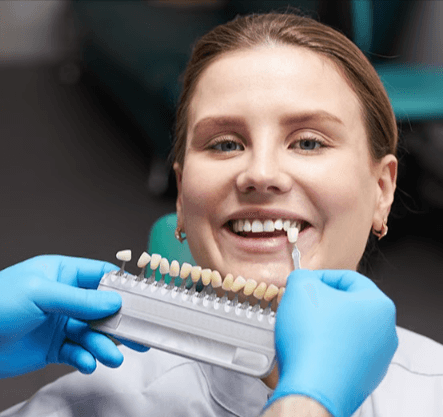
We use digital smile design and intraoral scanning to assess each case thoroughly before recommending a treatment path. The veneer type, shade, and shape are chosen based on your individual anatomy, not a generalized template. If you would like to understand your options more clearly, our team is here to help.
Deciding Between Porcelain and Composite Veneers
Porcelain and composite veneers both have a place in cosmetic dentistry. Porcelain offers superior aesthetics, greater stain resistance, and a longer lifespan at a higher cost and with more preparation involved. Composite offers a faster, more affordable, and more conservative alternative that suits patients with mild cosmetic concerns or those not ready for a permanent commitment.
The decision comes down to your goals, your budget, and the condition of your teeth. A thorough consultation with our experienced cosmetic dentists is the most reliable way to determine which option gives you the best outcome for your specific situation.
Frequently Asked Questions
Can I switch from composite to porcelain veneers later?
Yes, it is possible to upgrade from composite to porcelain veneers at a later stage. Your dentist will assess the condition of your teeth and existing composite work before recommending the best approach for the transition.
Do veneers affect the way I eat or speak
Most patients adapt quickly and notice little to no difference in how they eat or speak after the adjustment period. Porcelain veneers in particular are designed to feel smooth and natural, closely mimicking the surface of real teeth.
Are veneers suitable for teenagers?
Veneers are generally recommended for patients whose teeth and jaw have fully developed, which typically occurs in the late teens. A clinical assessment is needed to determine whether a younger patient is ready for the procedure.
Will my veneers match the rest of my teeth?
Both porcelain and composite veneers are custom-shaded to blend with your surrounding teeth. Porcelain tends to achieve a closer match in terms of light reflection and translucency, particularly for patients with naturally light or semi-transparent enamel.
Is the process of installing composite veneers painful?
No, it’s usually painless, with little discomfort, though some need numbing, and you can work right afterward.
Can I get a composite veneer in one dental visit?
Yes, direct composite veneers are done in one session at the dentist, unlike indirect ones which need two visits.

Written by
Dr. Micheline Katramiz
General Dentist, Specialist Pediatric Dentistry
Dr. Micheline Katramiz is a specialist pediatric dentist with over seven years of experience in Lebanon and the UAE. She holds a Master's degree in Pediatric Dentistry and Dental Public Health from the Lebanese University. Her expertise includes interceptive orthodontics, Invisalign First, conscious sedation, restorative dentistry, and preventive dental care for children and adolescents. Dr. Katramiz has also contributed to research exploring sleep disorders in children and their impact on growth.


